Someone tells you their sister’s name, the date of the offsite, the book they think you’d like. You nod, you mean to remember, and by Friday it’s gone. It isn’t that you weren’t listening. A conversation is just a hard place to remember things. Here’s why, and how to remember what people say, including the part most of us find hardest: their names.
You’re busy while they’re talking.
In a conversation you’re doing several things at once: following what they say, reading their face, and working out what you’ll say next. That last one takes more attention than it feels like. Details that arrive while you’re planning your reply often never get stored properly in the first place. Psychologists have measured this. In a 1973 study, people took turns speaking in a group. They remembered least of what was said just before their own turn, while they were getting ready to talk.
Nothing makes it stick.
When you read something, you can go back over it. A conversation goes by once. Since Hermann Ebbinghaus’s experiments in the 1880s, psychologists have known that new information fades quickly without review, much of it within a day. A detail you hear once and never repeat is exactly the kind that fades.
It didn’t feel important at the time.
A lot of what we forget is small. “I’ll send you that article.” “Remind me to introduce you to Sam.” In the moment it doesn’t seem worth writing down. Later it turns out to be the thing the other person remembers you saying.
How to remember what people say.
Say it back. Repeat a detail out loud, like “so the offsite’s on the 14th.” It gives you a second chance to remember it, and gives them a chance to correct you.
Ask one question about it. A detail you’ve asked about is one you’ve thought about, and thinking about something is what makes it stick: “The 14th? Is that the week of the launch?”
Write one line afterwards. Not full notes, just the promise or the name. Thirty seconds right after a conversation beats ten minutes the next day.
Look at it again tomorrow. A quick review the next day does more than a lot of effort later on. It’s why a short list you actually reread works better than a perfect system you don’t.
Get promises out of your head. Anything with a “by when” belongs in a calendar or a to-do list the same day, not in your memory.
How to remember people’s names.
Names are harder to remember than almost anything else you learn about a person. In a 1987 study, people found it much easier to recall that someone was a baker than that their surname was Baker. A job connects to everything you already know about bakers. A name, on its own, connects to nothing.
So give it something to connect to. Use the name once straight away: “Nice to meet you, Priya.” Ask about it if it’s unusual. Then tie it to something they told you: Priya, who just moved from Leeds. Afterwards, write down the name with that one detail. Next time, the detail brings back the name.
If you’ve forgotten anyway, say so early. “Sorry, tell me your name again?” is easy in the first few minutes and gets harder every week.
How to remember conversations.
For a longer conversation, like a catch-up with a friend or a meeting with a client, the gist usually stays and the specifics don’t. Right afterwards, write three things: anything new they told you, anything you agreed, and one thing to ask about next time. Read it before you see them again. It takes a minute, and it’s most of the reason some people seem to remember everything.
Where Dewby fits.
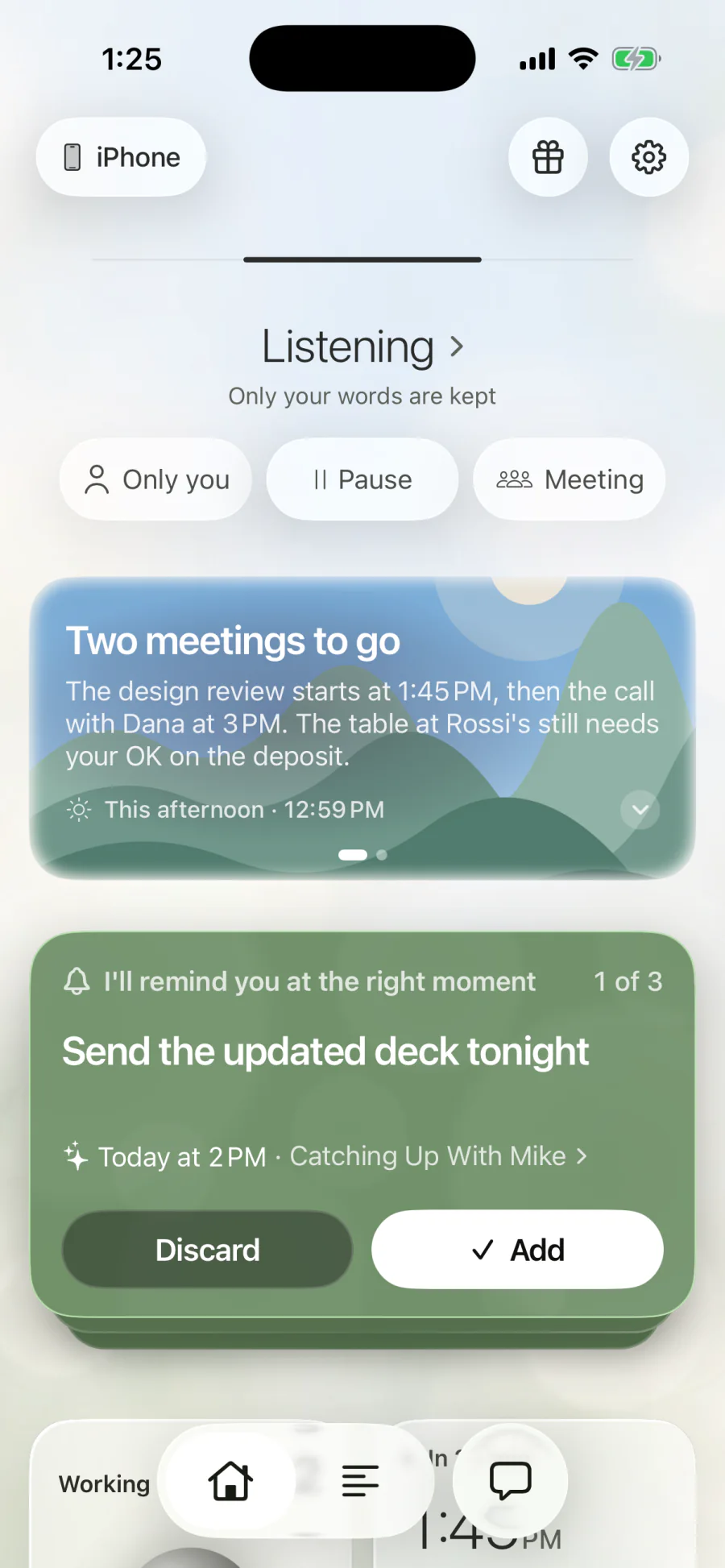
We made Dewby for the gap between “I’ll remember that” and actually remembering it. When you choose to have it listen, it keeps what was said. It picks out the promises and the names, and turns them into reminders and to-dos you can check the next day. It doesn’t replace paying attention. It just means the small things don’t depend on it.