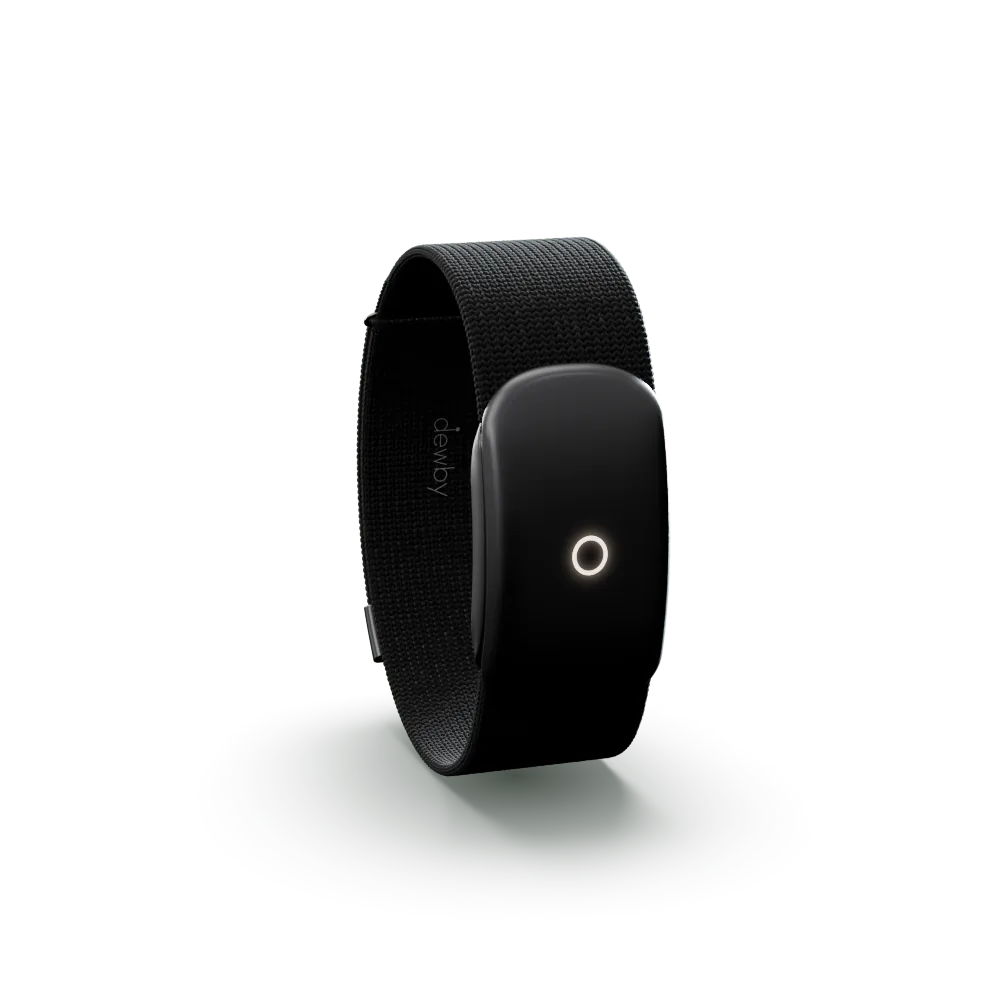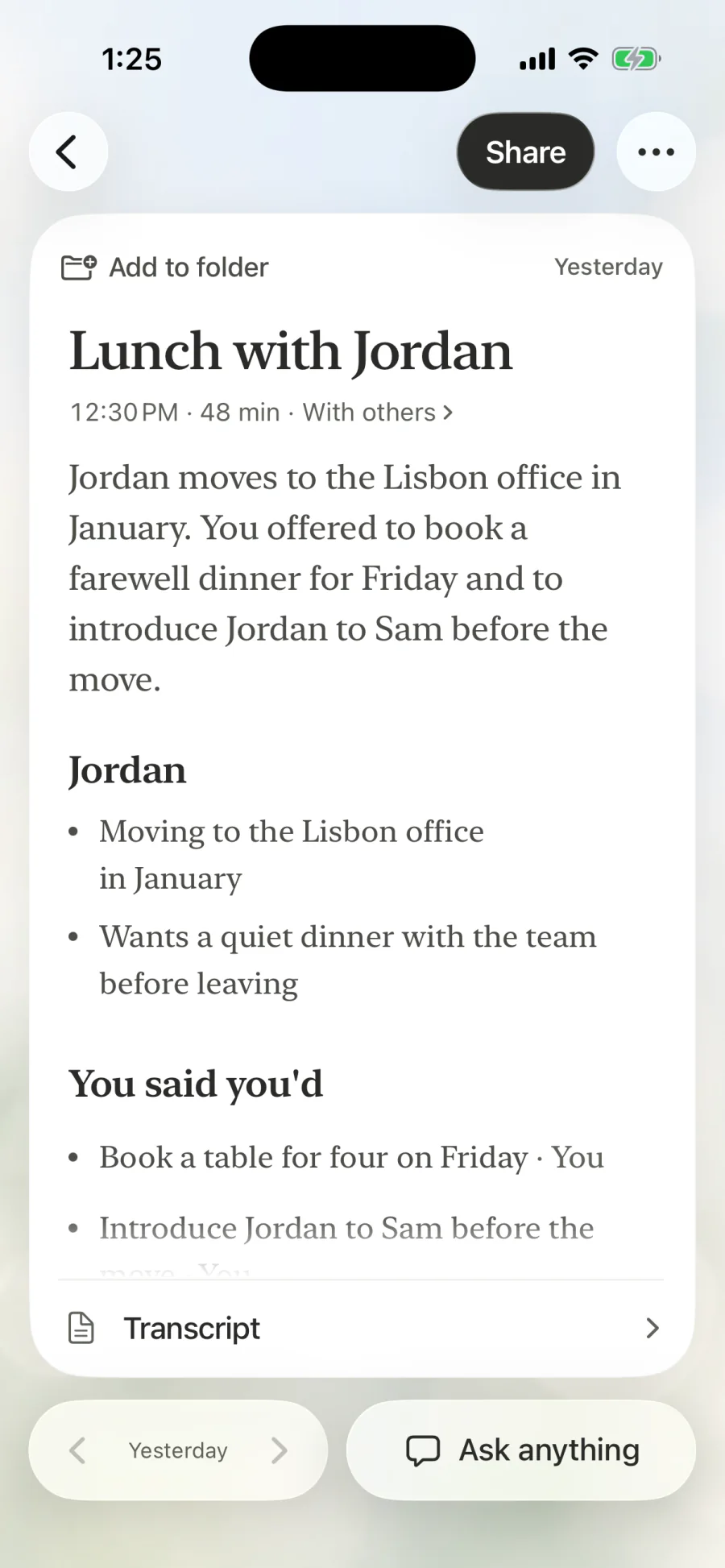
Short version: ask everyone before you start, record where people can see it, and check your state’s consent rule. On an iPhone, open Voice Memos, tap record and put the phone face up in the middle of the table. A wearable with a light, like Dewby, does the same job without a phone on the table, and turns the meeting into notes and follow-ups afterwards.
On a video call, recording is a button. Everyone sees the red dot, and most people have stopped noticing it. In a meeting room, a coffee shop or a client’s office there’s no dot. There’s you, a phone or a device, and the people across the table, who may or may not know their words are being kept.
Done well, recording an in-person meeting is normal and useful. Done badly, it’s the fastest way to make a room go quiet. Here’s how to stay on the right side of that.
Say it at the start.
The easiest fix is also the most important one. Before you begin, say something like “Mind if I record this so I can take proper notes?” Most people say yes. The few who say no will appreciate being asked, and you’ve saved yourself from finding out the hard way.
If someone joins halfway through, say it again. It takes five seconds.
Know what the law asks.
In the US it depends on the state. Most states let you record a conversation you’re part of as long as one person agrees, and that person can be you. About a dozen, including California, Florida, Illinois, Massachusetts, Pennsylvania and Washington, require everyone’s consent. If people in the meeting are in different states, or you’re not sure, assume you need everyone’s okay. Workplaces often have their own rules on top of the law, so check before you record at work.
This isn’t legal advice. It’s the reason asking first is the safe default.
Make it visible.
People are more comfortable when they can see that something is recording and when it stops. Put your phone face up on the table, not in your pocket. If you use a wearable, pick one with a light that shows when it’s listening, and keep it where people can see it. When the conversation turns sensitive, offer to pause. It’s a small gesture that buys a lot of trust.
Record less than you think.
You rarely need the whole hour. Start when the meeting actually starts, not during the small talk in the elevator, and stop when it’s over. A short, clean recording is easier to search, easier to share, and easier to explain if anyone asks.
Use it the same day.
A recording nobody listens to is just a file. What you want from most meetings is three things: what was decided, who’s doing what, and anything you promised. Pull those out the same day, while you still remember. Then send the follow-up while the meeting is still fresh.
This is the part Dewby is built for. You tap the band for one conversation, and its ring of light shows the room it’s on. Afterwards you get the notes, the to-dos and a draft of the follow-up. Nothing is sent until you say so.
The short version.
Ask at the start. Know your state’s rule. Keep the recorder where people can see it. Pause for the sensitive parts. Stop when it’s over. Write down the decisions and promises the same day.